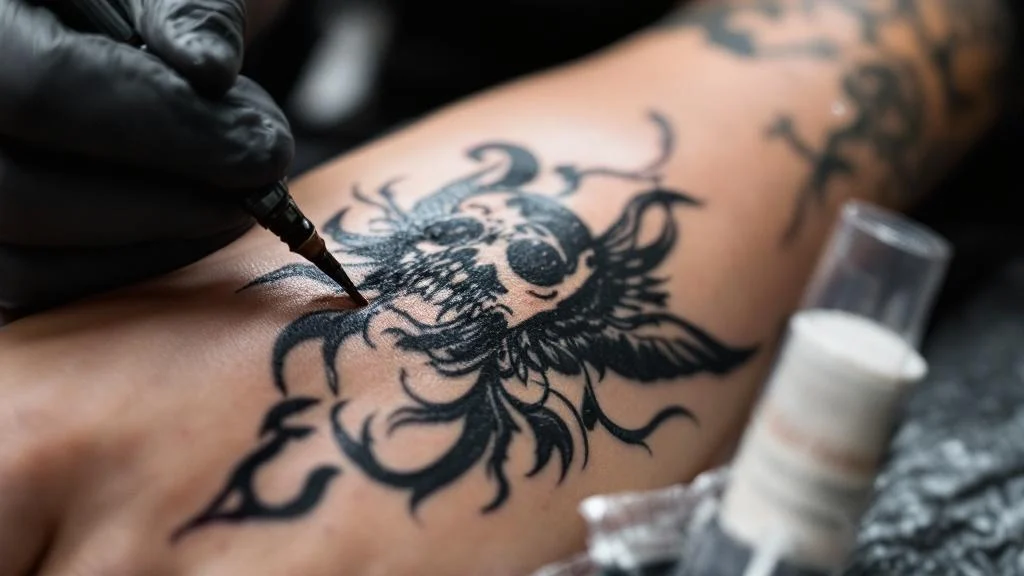
Tattoo efterpleje is essential to ensure your new ink heals properly and stays vibrant for years. Effective aftercare not only prevents infections but also enhances the longevity and appearance of your tattoo. In this guide, we’ll explore best practices, useful tips, and common missteps to avoid during the tattoo aftercare process.
- Understanding Tattoo Efterpleje
- Initial Steps After Getting a Tattoo
- Essential Aftercare Products
- Daily Aftercare Routine
- Common Mistakes to Avoid
- Long-Term Care for Your Tattoo
- What to Do If Something Goes Wrong
Understanding Tattoo Efterpleje
Tattoo efterpleje, or tattoo aftercare, encompasses the steps taken to ensure a tattoo heals correctly. This process is vital for maintaining vibrancy and avoiding complications like infections. (See: Tattoo Aftercare – Wikipedia.)
A tattoo is essentially a decorative wound. The skin is punctured repeatedly with needles to inject ink, making it vulnerable to bacteria. Proper aftercare fosters a healing environment, allowing the skin to recover while preserving the design’s clarity and color. (See: Tattooing and Health Risks – NCBI.)
Initial Steps After Getting a Tattoo
Leaving the tattoo studio marks the start of your healing journey. The first few hours are critical, as your skin is most vulnerable then. (See: Tattoo Care – American Academy of Dermatology.)
After completing your tattoo, your artist will clean the area and apply a bandage. This initial wrap protects your fresh tattoo from dirt and bacteria. Keep the bandage on for a few hours, as instructed. A properly bandaged tattoo feels snug but not constricting, with minimal bleeding or leakage.
Essential Aftercare Products
Choosing the right products is crucial for effective healing. Recommended ointments and lotions create a barrier that locks in moisture and prevents scabbing.
Many tattoo artists suggest fragrance-free, hypoallergenic lotions. Popular options include Aquaphor and specialized tattoo balms, designed to soothe the skin without irritation.
Natural aftercare solutions like coconut oil and shea butter can be effective too, but ensure they’re pure and unrefined. Commercial products often contain additives that promote faster healing and infection prevention.
Daily Aftercare Routine
Stick to a consistent tattoo care routine for optimal healing. Here’s a step-by-step guide:
- Wash your hands thoroughly before touching your tattoo.
- Gently remove the bandage and wash the tattoo with lukewarm water and a mild, fragrance-free soap.
- Pat the area dry with a clean towel. Do not rub.
- Apply a thin layer of your chosen ointment or lotion to keep the tattoo moisturized.
Repeat this process 2-3 times a day for the first week. As the tattoo heals, you can reduce the frequency, but maintaining cleanliness and moisture remains crucial.
Common Mistakes to Avoid
Even with the best intentions, some common mistakes can hinder healing. Over-washing strips the tattoo of essential oils, while under-washing can lead to infections. Finding the right balance is key.
Ignoring signs of infection or irritation is another pitfall. Symptoms like redness, swelling, or pus indicate that professional advice may be necessary. It’s wise to err on the side of caution and seek help if something feels off.
Long-Term Care for Your Tattoo
Once healed, maintaining your tattoo’s vibrancy is crucial. Regular moisturizing keeps the skin healthy, enhancing the tattoo’s look. Consult your artist or dermatologist about suitable products.
Sun protection is paramount. Ultraviolet rays can fade tattoos, so apply a broad-spectrum sunscreen with SPF 30 or higher whenever your tattoo is exposed to sunlight.
What to Do If Something Goes Wrong
Despite diligent aftercare, issues can arise. Recognizing signs of infection or an allergic reaction early is essential. Symptoms include persistent redness, swelling, or discharge from the tattooed area.
If you notice these symptoms, consulting a healthcare provider is advisable. They can guide whether antibiotics or other treatments are needed. Prompt action can prevent complications and ensure your tattoo heals as intended.
Proper tattoo efterpleje is about more than immediate healing; it ensures that your tattoo remains a vibrant, cherished part of your skin for years. By following these guidelines, you’ll be on your way to achieving a beautiful, long-lasting tattoo.
For more aftercare tips and to explore our latest articles on tattoo maintenance, sign up for our newsletter today. Stay informed and keep your ink looking its best!
Frequently Asked Questions
Hvad er vigtigt at huske under tattoo efterpleje?
Det er vigtigt at holde tatoveringen ren og fugtig. Sørg for at anvende en mild sæbe og en anbefalet salve for at fremme heling og forhindre infektion.
Hvor lang tid tager det for en tatovering at hele?
Helingsprocessen kan variere, men det tager typisk mellem 2 til 4 uger for en tatovering at heles helt, afhængigt af størrelsen og placeringen.
Kan jeg dække min tatovering efter at den er lavet?
Det anbefales at dække tatoveringen med plastfolie eller en bandage i de første 24 timer. Herefter skal den holdes åben for luft, men undgå direkte sollys.
Hvad skal jeg undgå under helingsprocessen?
Undgå at klø, skrabe eller pille ved tatoveringen. Det er også vigtigt at undgå svømmebassiner, saunaer og direkte sollys indtil den er helt helet.
Hvornår kan jeg genoptage træning efter at have fået en tatovering?
Det anbefales at vente mindst en uge, eller indtil tatoveringen er helet, før du genoptager intensiv træning for at undgå sved og friktion, som kan irritere huden.